Trying to decide between Franklin and Brentwood for your next move? You are not alone. Both deliver top-tier schools, beautiful homes, and easy access to Nashville, yet the day-to-day feel is different. In this guide, you will quickly compare commute patterns, schools, housing, taxes, and lifestyle so you can choose with confidence. One quick note before we start: if you came across ZIP code 37376, that is Sherwood in Franklin County, not the City of Franklin in Williamson County that most people compare with Brentwood. For this guide, Franklin refers to the City of Franklin in Williamson County. You can verify the Sherwood ZIP here at zipcode.org. Let’s dive in.
Quick orientation
Franklin and Brentwood are neighboring cities in Williamson County just south of Nashville, connected by I-65. Brentwood sits closer to downtown Nashville, which often means a shorter drive for downtown commuters. Franklin sits a bit farther south and includes a lively historic core plus suburban and estate neighborhoods.
Typical drive times vary by starting point and time of day. Many Brentwood-to-downtown trips fall in the 20 to 30 minute range in normal conditions. Many Franklin-to-downtown trips run 25 to 40 minutes. Expect longer times during peak rush hours.
If you commute to the Cool Springs business and retail corridor, Franklin is very well positioned. Brentwood has strong access too, especially from its eastern neighborhoods near I-65.
Lifestyle and daily rhythm
Franklin: Historic energy and variety
Franklin offers a charming, walkable Main Street with independent shops, restaurants, and seasonal events. You will find a mix of in-town historic homes, newer townhomes and condos, and planned communities within a short drive. To get a feel for the scene, explore this roundup of favorite things to do in downtown Franklin from Condé Nast Traveler: the downtown Franklin guide. Westhaven, one of Franklin’s best-known master-planned communities, blends residences with town-center retail and parks, giving you a convenient, neighborhood-scale lifestyle. Learn more about Westhaven’s setup on Livability’s neighborhood profile.
Walkability in Franklin is strongest in and around the historic core and in planned communities designed for pedestrians. For a high-level snapshot, see Walk Score’s overview of Franklin.
Brentwood: Serene, residential, and park-forward
Brentwood reads more residential and quiet, with larger lots, well-kept streets, and destination parks like Crockett Park and Deerwood Arboretum. Retail and offices concentrate in compact nodes, so most daily errands involve short drives. The feel is polished and low-key, which many buyers value for privacy and ease.
Schools and education
Both cities are served by Williamson County Schools, a consistently high-performing district in Tennessee. You can review the district’s high school list and links to each campus directly on the WCS high schools page. District recognition is frequent, and families often choose Williamson County for its academic and extracurricular options.
School zoning varies by exact address. In Brentwood, households commonly attend Brentwood High or Ravenwood High. In Franklin, assignments vary and may include Franklin High, Centennial, Page, or others. The best step is to verify the specific school boundary for each property you are considering. For private education, the region offers selective options that many relocating families explore. A helpful overview of top Nashville-area private schools is available from College Transitions.
Commute and access
Downtown, hospitals, and business hubs
If your schedule requires frequent trips to downtown Nashville, Brentwood’s closer-in position can trim drive time. If your day centers on Cool Springs offices or retail, Franklin places you close to that corridor.
Airport access
BNA, Nashville International Airport, is a quicker drive from most Brentwood addresses than from southern Williamson County. From north Franklin and Cool Springs, access remains straightforward on I-65.
Transit alternatives
Driving is the default for most commuters. If you prefer to share the ride, regional vanpool and rideshare programs are available through VanStar. There is no standard commuter rail from Franklin or Brentwood to downtown Nashville. The WeGo Star line serves a different corridor to the east of downtown.
Housing and neighborhoods
What you will find in Franklin
Franklin offers broad variety. Near downtown you will see renovated historic homes with front porches and smaller lots. In the suburbs you will find mid-century neighborhoods, new construction in planned communities like Westhaven, and estate properties with acreage a short drive from town.
Price points in the City of Franklin typically span a wide range, from in-town condos and townhomes to luxury single-family homes and acreage. City-level median sale figures have recently fallen well below Brentwood’s luxury-leaning medians, which gives many buyers more options in Franklin across size, style, and budget.
What you will find in Brentwood
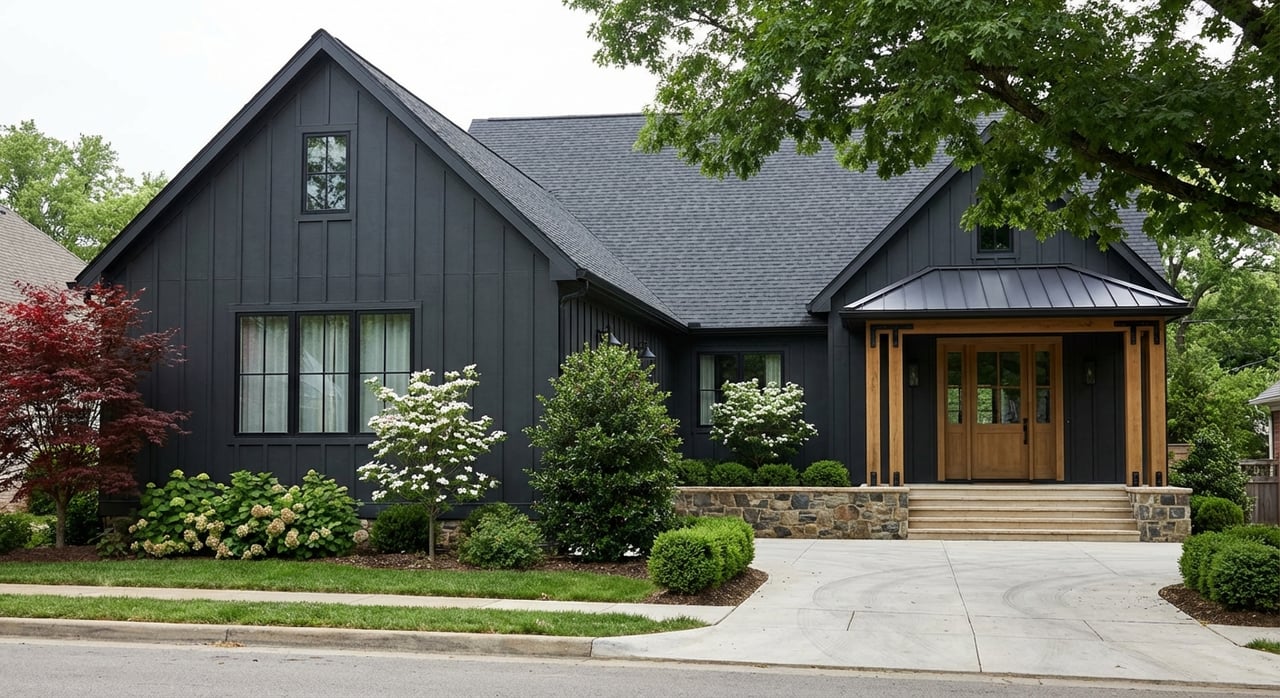
Brentwood skews toward executive and luxury single-family homes, often on larger lots. Architectural styles include brick traditional, European-inspired designs, and modern farmhouse. You will also find gated enclaves and custom estates in the highest price bands.
Recent market snapshots place Brentwood’s typical home values substantially higher than Franklin’s city median. Buyers who prioritize larger lots, newer executive construction, and quick access to downtown often focus here and budget accordingly.
Market pulse
Both cities are high-demand, low-inventory markets. Desirable neighborhoods can move quickly, especially when a well-priced listing hits the market. Month-to-month numbers and neighborhood medians change, so it helps to monitor live data when you are ready to tour and write.
Property taxes at a glance
Both cities are in Williamson County. Property taxes include county and city components, and rates can change with periodic reappraisals. The City of Brentwood explains how its portion works on its property tax page, and the City of Franklin outlines current budgeting and tax details in the FY 2026 budget materials.
Here is the basic math you will use in Tennessee:
- The county assesses residential property at 25 percent of market value.
- Your assessed value is then multiplied by the combined county and city tax rates, which are stated per $100 of assessed value.
Example calculation for illustration:
- Suppose your home’s market value is $1,000,000.
- Assessed value is 25 percent, or $250,000.
- If the combined rate were $2.00 per $100 of assessed value, your annual bill would be $250,000 ÷ 100 × $2.00 = $5,000.
Actual rates differ by city and year. Check the current county and city pages during your search.
Side-by-side snapshot
| Category | Franklin | Brentwood |
|---|---|---|
| Overall feel | Historic downtown energy with suburban and estate options | Quiet, residential setting with larger lots and luxury enclaves |
| Commute to downtown Nashville | Often 25–40 minutes depending on neighborhood and time | Often 20–30 minutes depending on neighborhood and time |
| Cool Springs access | Very close to the corridor | Easy access, especially via I-65 |
| Walkability pockets | Historic core and planned communities show highest walkability. See Walk Score’s Franklin snapshot. | Mostly car-dependent outside mixed-use nodes; parks and greenways add recreation options |
| Public schools | Served by Williamson County Schools. Verify zoning by address on the WCS high schools page. | Served by Williamson County Schools. Verify zoning by address on the WCS high schools page. |
| Private schools | Options in and near Franklin and Cool Springs. See private school overview. | Options near Brentwood and south Nashville. See private school overview. |
| Housing mix | Historic homes, townhomes/condos, master-planned neighborhoods, and acreage | Executive homes, custom estates, gated enclaves, larger lots |
| Typical price orientation | Broad range with more variety across price points | Higher typical values with many $1M-plus neighborhoods |
How to choose what fits you
Choose Brentwood if you want a quieter residential setting, shorter downtown commutes, larger lots, and you are targeting executive or luxury housing. Many corporate and medical professionals appreciate the combination of privacy and access.
Choose Franklin if you want a mix of historic charm and suburban convenience, a lively downtown calendar, and a wider spread of housing types and price points. Families who want both culture and convenience often find their sweet spot here.
If you are weighing two or three neighborhoods in each city, spend an evening drive at school pickup time, a Saturday morning around parks and shops, and a test commute on a weekday. Those touchpoints will tell you a lot about daily life.
Ready to compare specific homes, run exact school-zone checks, and verify holding costs by address? Reach out to Starling Davis for a private consultation. Our team pairs deep local knowledge with concierge service to make your move clear and confident.
FAQs
Is ZIP code 37376 part of the Franklin vs. Brentwood comparison?
- No. ZIP 37376 is Sherwood in Franklin County. The Franklin most buyers compare with Brentwood is the City of Franklin in Williamson County.
How do I verify school zoning for a home in Franklin or Brentwood?
- Use the Williamson County Schools resources and contact the district to confirm the exact school assignment tied to a specific address, since zoning lines can change.
What are typical drive times from Franklin and Brentwood to downtown Nashville?
- Many Brentwood-to-downtown trips are about 20–30 minutes in normal conditions, and many Franklin-to-downtown trips are about 25–40 minutes, with longer times at rush hour.
Are there walkable areas in either city for daily errands and dining?
- Yes. Franklin’s historic downtown and certain planned communities are the most walkable pockets, while most Brentwood neighborhoods are car-dependent with parks and mixed-use nodes.
How do property taxes work for homes in Franklin and Brentwood?
- Tennessee assesses residential property at 25 percent of market value, then applies combined county and city tax rates per $100 of assessed value; check each city’s finance page for current rates.