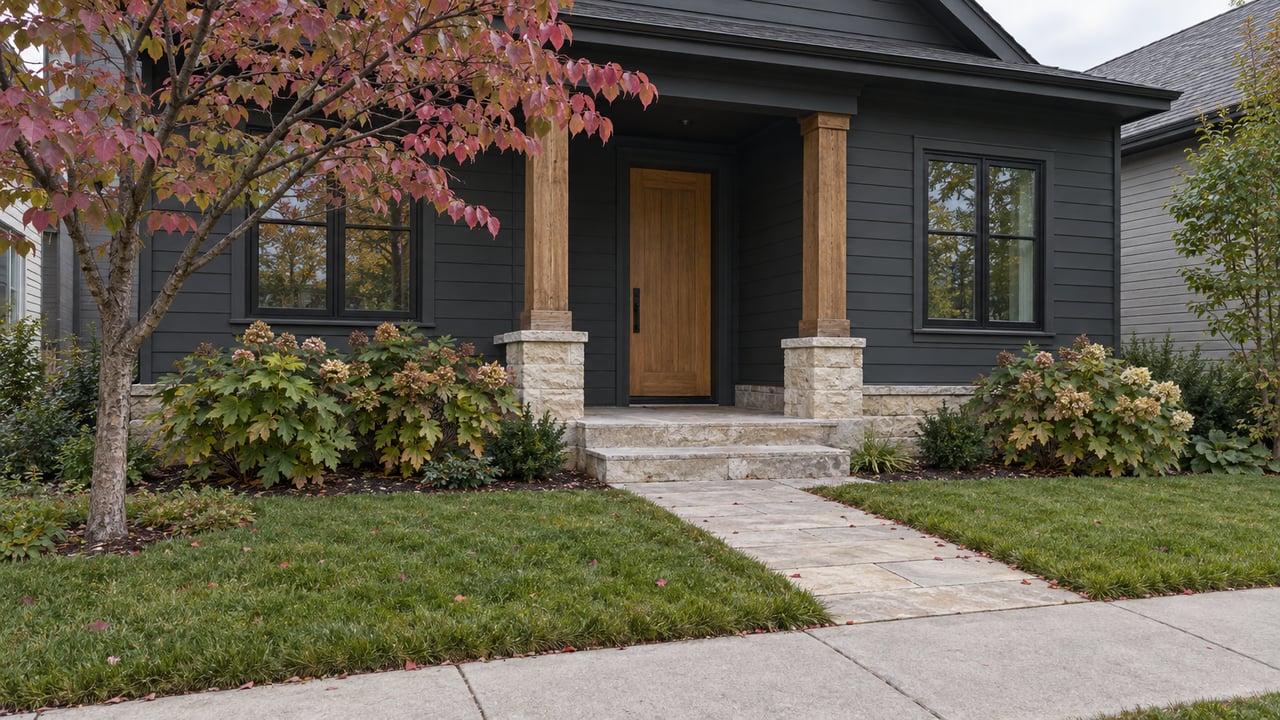
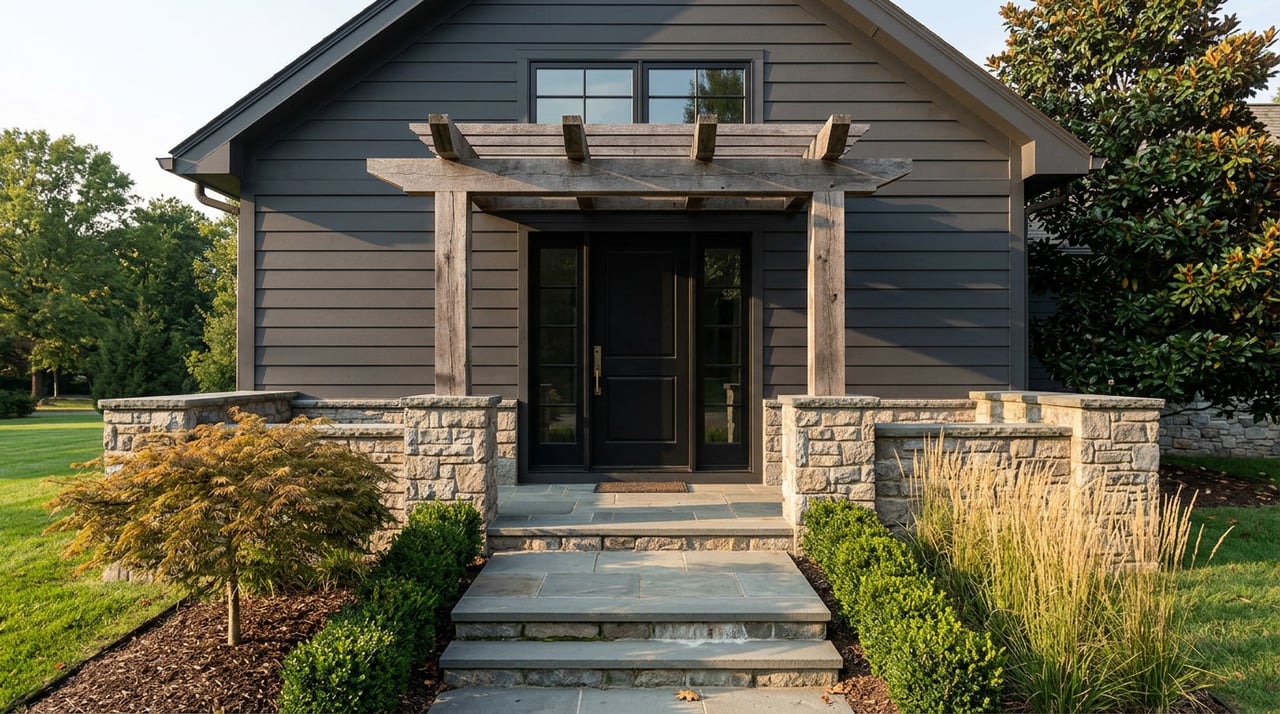
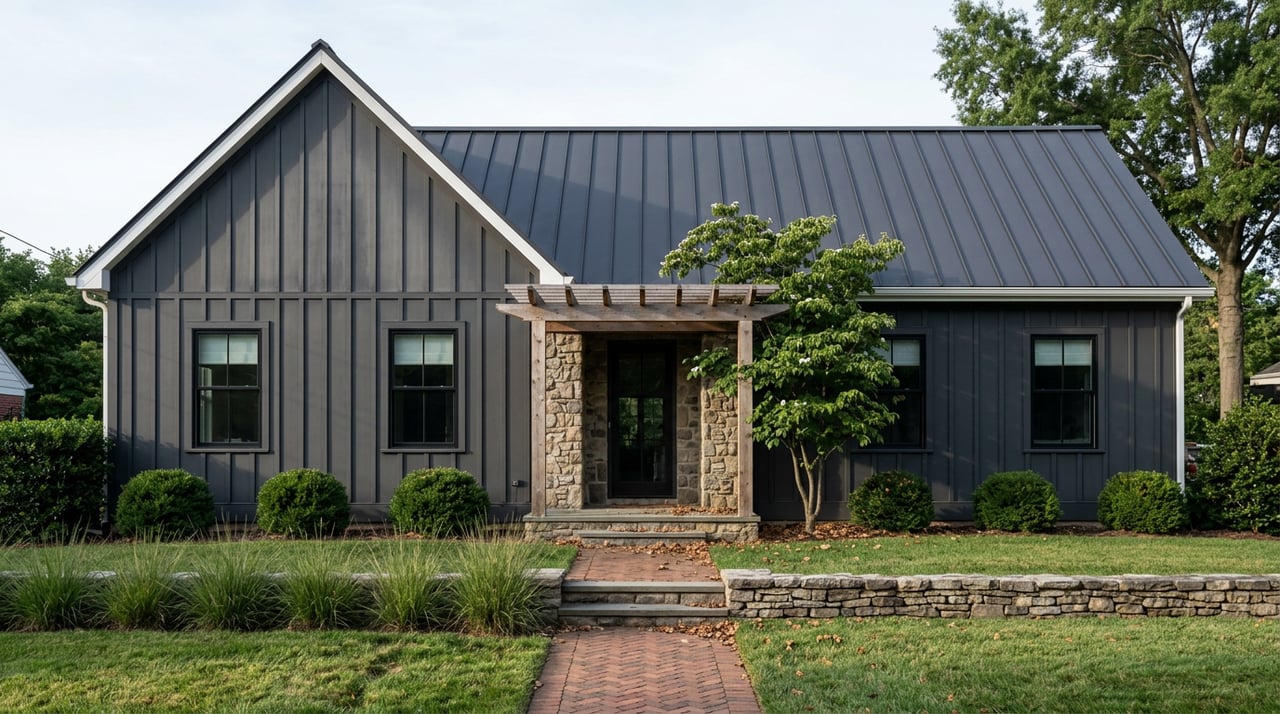
Two houses went up on Battery Lane in 2024, built by the same hand, finished the same year, almost identical in size. One measured 5,619 square feet. The other measured 5,709 square feet, ninety square feet larger. When they closed, the smaller house sold for $2,100,000 and the larger one sold for $1,925,000, a gap of $175,000 running the wrong direction on square footage.
That kind of spread usually gets explained away with finish level or lot orientation. In this case the real answer is simpler and stranger: both houses sit on one parcel, co-owned under a Tennessee legal structure called a Horizontal Property Regime, and that structure is doing more to shape price, financing, and resale than most buyers realize when they're standing in the kitchen admiring the quartz.
What's Actually Under the Nicest New Construction in 37215
Green Hills has been fully built out since the 1960s. There is no raw land left to develop, which means almost every new-construction listing you tour is standing on a lot that used to hold a smaller, older house. Over the past twelve months, roughly 29 percent of Green Hills house sales were HPR-detached homes, meaning two separately owned houses sharing one lot, while the remaining 71 percent were traditional site-built homes on their own parcel. New construction disproportionately falls into that HPR share, because tearing down one house and building two is the fastest way to add supply in a neighborhood with no vacant ground.
The mechanism that makes this legal and fast is Tennessee's Horizontal Property Act. It lets a builder record a master deed and put two homes on a lot that used to hold one, without going through Nashville's standard subdivision process, which requires application materials submitted weeks ahead of a Planning Commission hearing. An HPR filing, by contrast, can take as little as a week and cost around $2,000 in legal and filing fees. Between 2010 and 2023, that shortcut enabled more than 20,000 infill homes across Nashville, according to a Mercatus Center study on the law's effect on the city's housing supply, putting Nashville second only to Houston among large metros for new single-family infill built close to downtown.
From the sidewalk, a detached HPR home in Green Hills can look exactly like the traditional single-family house next door. It has its own driveway, its own address, its own front door. What it doesn't have is a lot line that stops at your property. You co-own the land under both houses with your neighbor, governed by a homeowners association that exists specifically because the state requires one whenever a parcel is split this way.
Two Houses, Same Builder, $175,000 Apart
That's what makes the Battery Lane pair such a clean read on the mechanism. Same builder, same year, nearly the same footprint, yet one house closed at a meaningfully higher number than the other. Some of that gap is ordinary market noise, buyer preference for one floor plan over another, timing of the two closings. But part of what an appraiser weighs on a detached HPR is the condition and marketability of the other half of the shared lot, not just the house being financed. A well-kept HPR mate supports value. A neglected one drags on it. That single variable doesn't exist for a traditional site-built home, where your neighbor's landscaping choices have no bearing on your appraisal.
A similar structure is playing out right now at the corner of Belmont Boulevard and Burton Avenue, where a small redevelopment project has replaced older houses with new construction, including a parcel carrying two detached HPR units side by side. Buyers touring that corner are looking at homes that read as ordinary new-construction single-family listings. The plat tells a different story.
| Traditional Site-Built | Detached HPR | |
|---|---|---|
| Land ownership | Sole owner of the lot | Co-owned with the neighboring unit, per master deed |
| Governing document | Standard deed | Master deed plus recorded HOA declaration |
| Typical financing | Conventional mortgage | Usually conventional, but some lenders apply condo-style underwriting |
| Appraisal inputs | Subject property only | Subject property plus condition of the shared-lot neighbor |
| Ongoing compliance | None beyond standard property tax | HOA must file annually with the TN Secretary of State ($100 fee) to stay active |
What This Means Before You Write an Offer
Tennessee's Horizontal Property Act was written specifically so HPR buyers could use ordinary conventional mortgages rather than the condo loans typically required for stacked, vertical developments. That's the law on paper. In practice, buyers and agents in Nashville still report that some lenders apply condo-style scrutiny to detached HPRs anyway, treating the shared land ownership as a red flag worth extra underwriting steps even when it shouldn't legally require them. Confirming your lender's specific comfort with HPR financing before you fall in love with a house on Tyne Meade or Graybar Lane will save you a week of stress during underwriting.
The HOA side carries its own quiet risk. Every HPR association has to refile with the state annually for a modest fee, and it is common enough for owners of fully detached units, where there's no shared wall or shared structure to insure jointly, to let that filing lapse since it rarely causes a problem day to day. It becomes a problem the moment you need the association's insurance coverage to be current, or the moment a title company flags a lapsed entity during your closing. Ask for the HOA's current standing with the state before you're under contract, not after.
If you're weighing a Green Hills HPR as an investment property with short-term rental income in mind, get clarity on permitting before you write the offer rather than after closing. Investors shopping detached HPRs in Nashville have flagged short-term rental permitting as a question that doesn't always have a clean answer, since the units are neither a standard single-family lot nor a conventional condo. Get that answer from Metro in writing before your first booking, not after.
A detached HPR home looks like a house you own outright. Legally, it behaves more like a duplex that happens to have walked its two halves apart and given them separate addresses.
Where This Shows Up on the Map
The concentration of new construction, and with it the concentration of HPR product, tracks closely with a handful of streets: Tyne Meade and the Tyne Boulevard frontage, Graybar Lane, the stretch of Granny White Pike that runs into what locals call Battery Lane through Oak Hill, and pockets of Woodmont, Hobbs Road, and Estes Road where older ranches have come down for larger builds. New-construction pricing in these pockets regularly clears $700 per square foot, well above the neighborhood's broader median, and that premium is exactly where the HPR question matters most, because it's exactly where builders are choosing this legal structure to make the economics of a teardown work.
It's worth knowing that Green Hills' active listing prices skew higher than what actually closes. At a recent snapshot, active inventory carried a median list price near $1,995,000, well above the trailing twelve-month closed median of $1,385,000. That gap exists largely because expensive new construction sits on the market slightly longer while it searches for the right buyer, which means a disproportionate share of what you'll see on a Saturday tour right now is exactly this kind of product.
None of this is a reason to avoid HPR homes in Green Hills. Plenty of buyers choose them deliberately for lower-maintenance yards and modern finishes on a walkable street. It's a reason to ask the specific questions before you're emotionally attached to the floor plan: is this site-built or HPR, is the HOA filing current with the state, will your lender treat this as a standard conventional loan, and if rental income matters to your plan, is the permitting settled or still a question mark.
Frequently Asked Questions
Does an HPR home qualify for a normal 30-year mortgage? Tennessee's law was written to allow conventional financing for HPR properties, unlike the condo-style loans required for stacked vertical developments. In practice, individual lenders vary in how they underwrite them, so confirming your specific lender's approach before you're under contract is worth the phone call.
Do I pay more or less in property tax for an HPR house compared to a standalone home? Each HPR unit is deeded and taxed individually once the master deed is recorded, similar to a standalone parcel. The tax treatment isn't the source of price variance between HPR units. Appraisal and financing nuances are.
Can I tell from a listing whether a Green Hills home is HPR or site-built? Not always. Some listings state it directly. Others, especially well-designed detached HPRs on quieter streets, are built to blend in with the surrounding site-built homes and won't announce it in the marketing copy. Asking your agent to confirm the deed type before a showing is the reliable way to know.
Green Hills rewards buyers who ask the right question at the right moment, and this is one of them. If you're comparing new construction in 37215 and want a straight answer on what you're actually buying before you write an offer, The Starling Davis Group can walk the deed with you before you fall for the kitchen. Buy a Home / Sell a Home.